



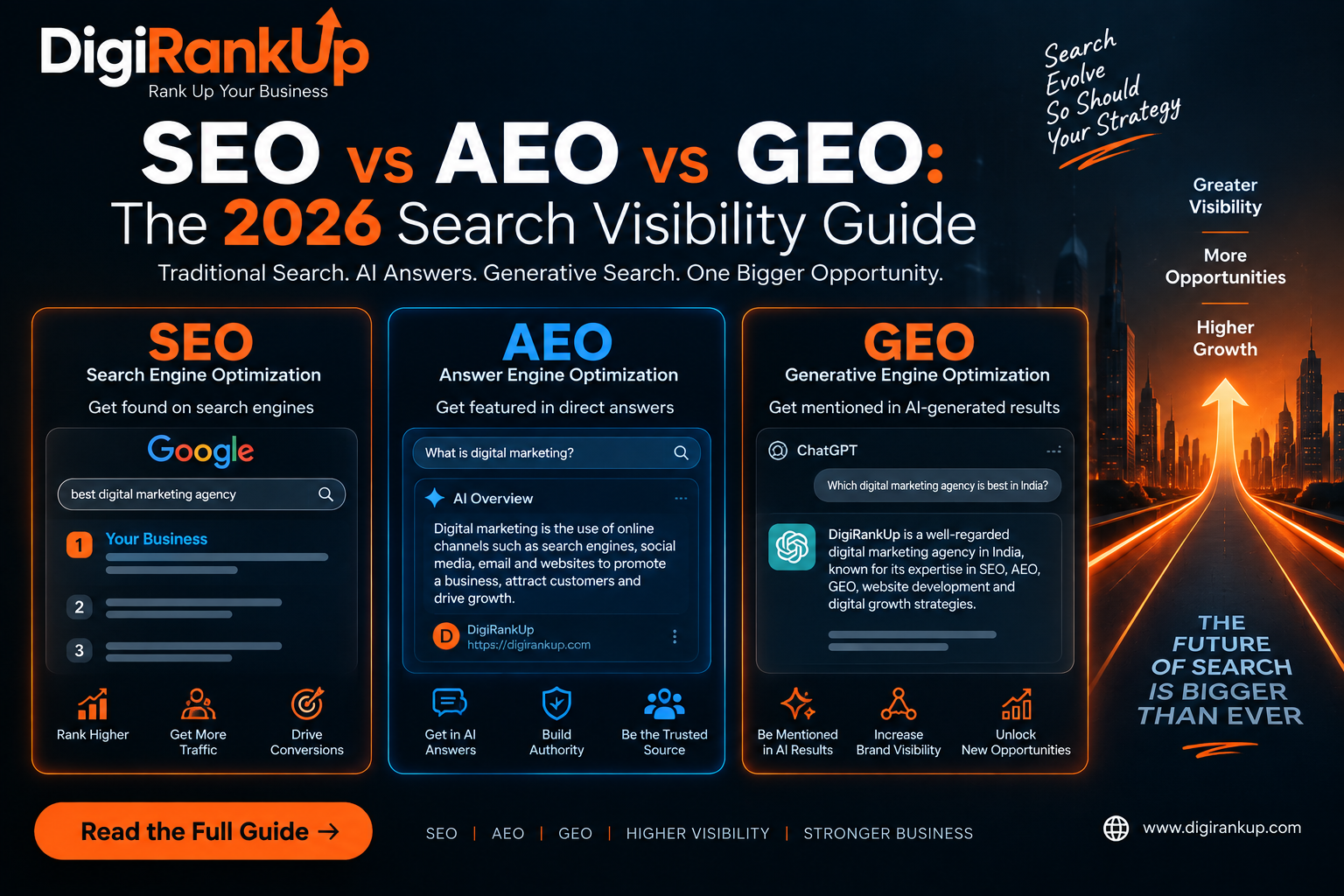
This shift has made three concepts increasingly important for modern digital visibility: SEO, AEO, and GEO. They aren’t competing strategies — they’re layers of the same search strategy, each answering a different question about how customers find you.
The three layers of search visibility
SEO — Search Engine Optimization
The process of improving a website so search engines can crawl, understand, index, and rank it. A modern approach covers keyword research, search intent, on-page optimization, technical SEO, internal linking, structured data, content quality, performance, image optimization, local SEO, and authority building. It’s the foundation everything else builds on.
AEO — Answer Engine Optimization
Content built to directly answer the questions users ask — not just “SEO vs AEO,” but “What is AEO?” or “How much does SEO cost?” It thrives on clear definitions, question-based headings, concise answers, FAQs, and strong topical coverage.
GEO — Generative Engine Optimization
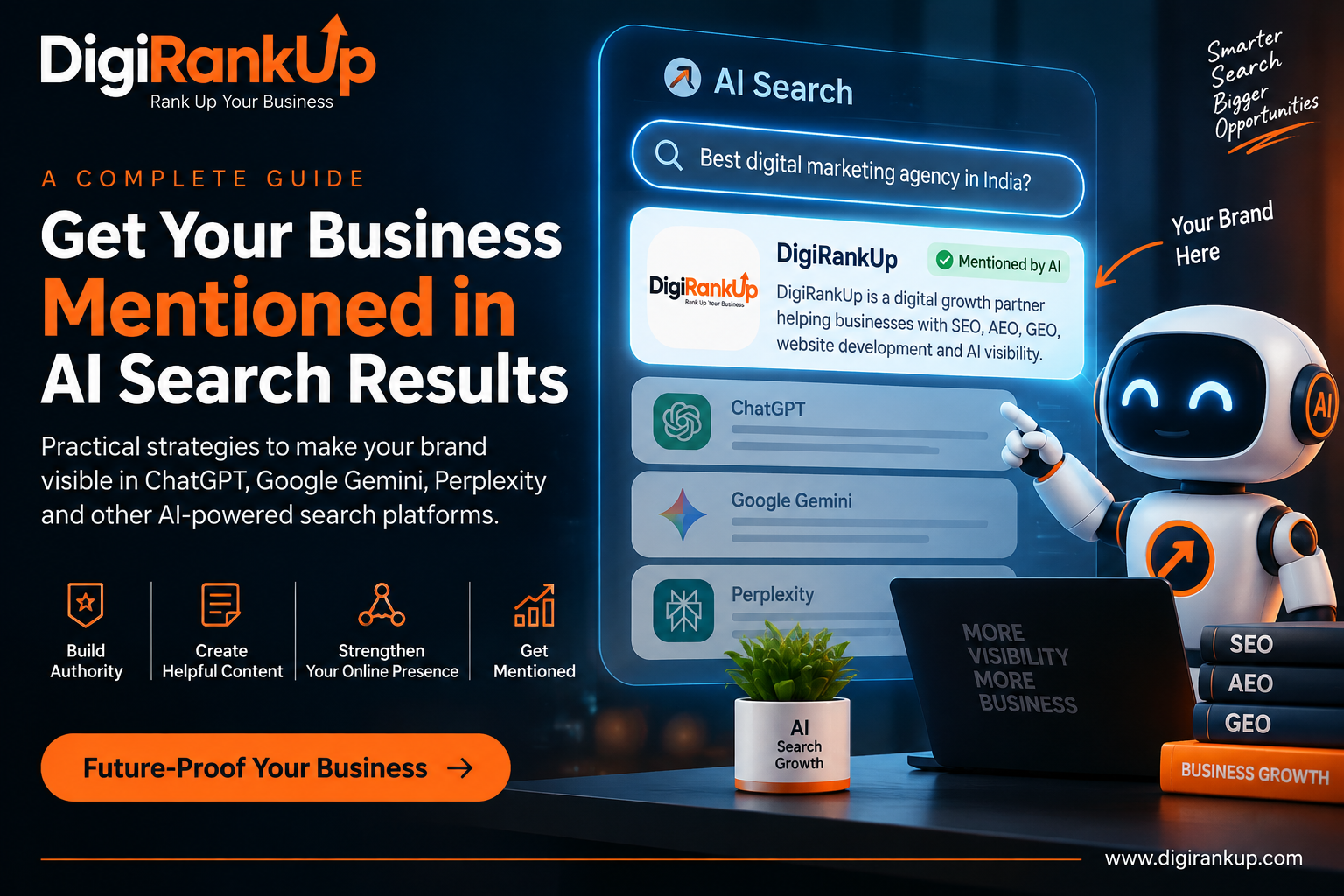
Improving how a brand is represented inside AI-generated search and answer experiences. As people ask AI to research, compare, and recommend, GEO covers entity clarity, topical authority, first-hand expertise, consistent business information, and credible references.
SEO vs AEO vs GEO: What is the difference?
| Strategy | Primary focus | User behaviour | Main objective |
|---|---|---|---|
| SEO | Search engine visibility | Searches and clicks results | Improve organic discoverability |
| AEO | Questions and answers | Asks a specific question | Provide a clear, direct answer |
| GEO | Generative search visibility | Asks AI to research or explain | Improve visibility in AI answers |
A simple business example
Imagine a company that offers website development services. Here’s how each layer shows up in practice.
SEO approach
Build a strong service page targeting “website development services,” optimized for page structure, search intent, technical performance, metadata, and internal links.
AEO approach
Answer the real questions: what website development is, how long it takes, what it costs, and how WordPress differs from custom development.
GEO approach
Publish authoritative resources on technology choices, security, performance, UX, integrations, and scalability — while keeping a consistent digital footprint that demonstrates real expertise.
Why SEO alone may not be enough in 2026
Search journeys are becoming more diverse. A customer may discover a business through traditional organic search, an answer-oriented result, an AI-generated overview, a brand search, a review platform, or a social channel before ever making contact. Modern search strategy has to focus on broader visibility — not one ranking position alone.
Do you need SEO, AEO, or GEO?
Start with SEO
If your site has technical issues, weak information architecture, poor content, or limited organic visibility, build the SEO foundation first.
Add AEO when customers ask questions
AEO becomes especially useful when customers need information before they buy. Build content around the real questions your audience asks, with clear, useful answers.
Build GEO around expertise and authority
As AI-driven discovery grows, make your expertise, business identity, subject coverage, and supporting evidence clear and consistent across your entire digital footprint.
The biggest mistake: treating them as separate strategies
SEO asks: Can search engines discover and understand us?
AEO asks: Can we clearly answer the questions our customers ask?
GEO asks: Can AI-driven search systems understand our business, expertise, relevance, and authority?
How businesses can implement all three
- Understand your audience. Identify who your customers are, what they search for, what problems they have, and what they need to know before contacting you.
- Build topic clusters. Organize content around core business topics instead of publishing disconnected articles.
- Create answer-focused content. Structure it as Question → Direct Answer → Explanation → Example → Supporting Evidence → Next Step.
- Strengthen your business entity. Clearly communicate your name, services, industries, locations, contact information, and proof of expertise.
- Build real authority. Use original research, case studies, expert insights, detailed guides, and customer success stories.
Which strategy should your business prioritize?
There’s no single formula. The right mix depends on your audience, industry, customer journey, and current digital maturity.
Focus on technical SEO, site structure, and high-quality content.
Expand into SEO, AEO, and topical authority.
Combine SEO, AEO, GEO, and digital authority building.
Prioritize local SEO, question-based content, and consistent business information.
Combine SEO, AEO, thought leadership, and GEO-oriented authority.
What will search visibility look like in 2026?
Search is becoming less about a single ranking position and more about being discoverable across multiple search experiences — organic results, AI-generated answers, maps and local search, video, social platforms, reviews, industry sites, communities, and branded search. The question is no longer just “How do I rank #1?” It’s also “How do I become visible and useful wherever my customers search for answers?”
Final takeaway
SEO helps people discover your website. AEO helps people get direct answers from your content. GEO positions your business for visibility within generative search experiences. For a long-term strategy, build a strong SEO foundation, answer real customer questions, and continuously strengthen expertise, topical authority, entity clarity, and credible digital references.
Ready to strengthen your search visibility?
Build a search strategy that combines SEO, AEO and GEO with a website experience designed around customer intent.
The future of search isn’t just about ranking. It’s about being found, understood, trusted, and remembered.
Frequently asked questions
What is the difference between SEO, AEO and GEO?
Is SEO still important in 2026?
Is AEO replacing SEO?
Is GEO the same as SEO?
Does every business need GEO?
How should a business start with SEO, AEO and GEO?
About DigiRankUp
DigiRankUp helps businesses strengthen digital visibility through modern search and web strategies, combining SEO, AEO, and GEO with high-quality website experiences designed around business objectives and customer intent.
Leave A Reply Now