



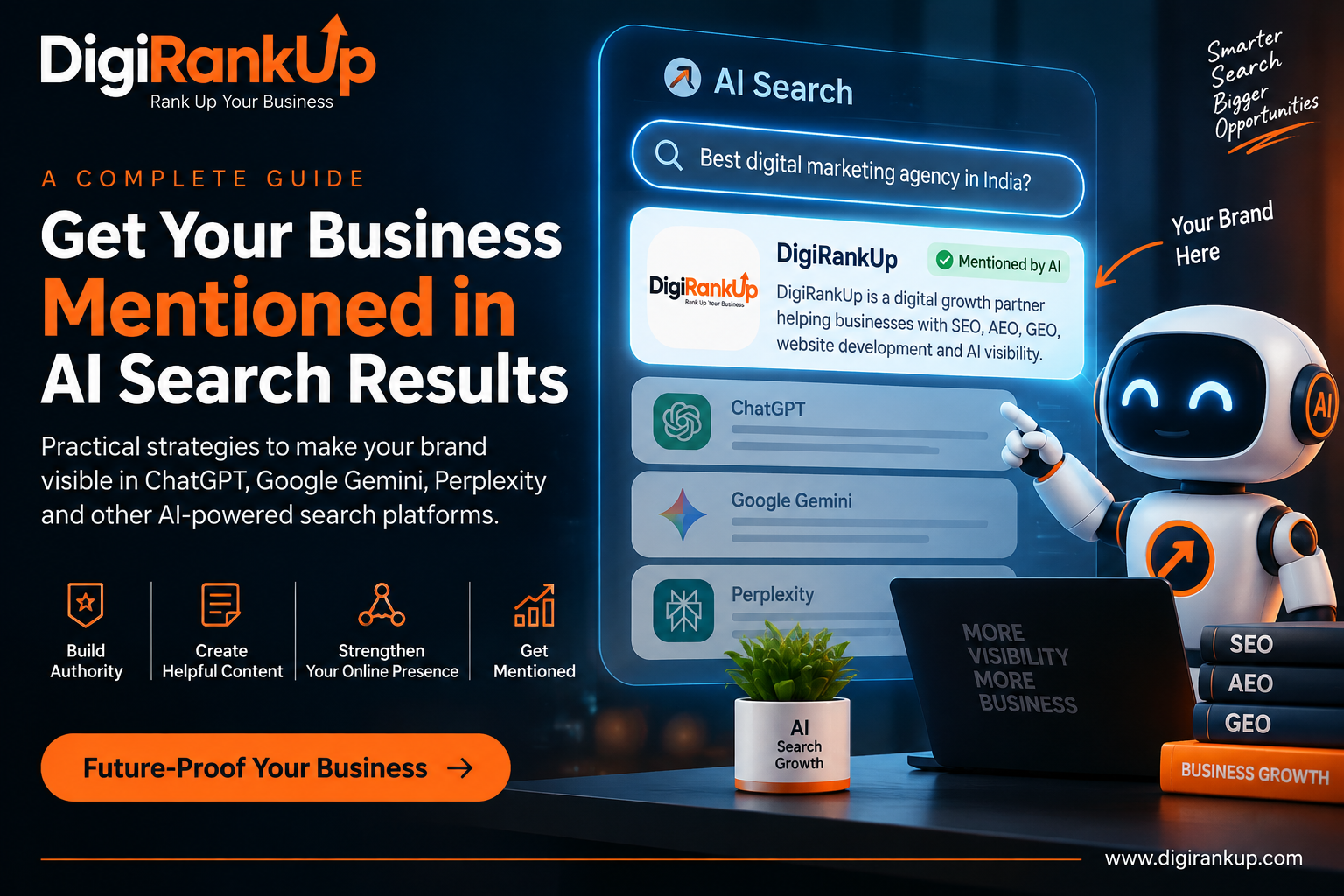

AI-powered search is changing how people discover businesses. Instead of typing short keywords and scanning ten blue links, users increasingly ask complete questions and expect a useful answer, comparison, recommendation, or summary.
That creates a new digital visibility question: How do you get your business mentioned in AI search results?
There is no guaranteed shortcut. The practical approach is to build a digital presence that is clear, useful, consistent, authoritative, and easy for search and AI systems to interpret.
What does it mean to be mentioned in AI search?
Your business may appear in an AI-generated answer as a cited source, recommended provider, example company, category option, product, or referenced brand. The format varies by platform and query.
Clearly explain who you are, what you offer, who you serve, where you operate, and what makes your expertise relevant.
Answer real customer questions with specific information rather than generic promotional copy.
Support important claims with evidence, experience, original insights, legitimate references, and consistent business information.
AI Search Visibility vs. Traditional SEO
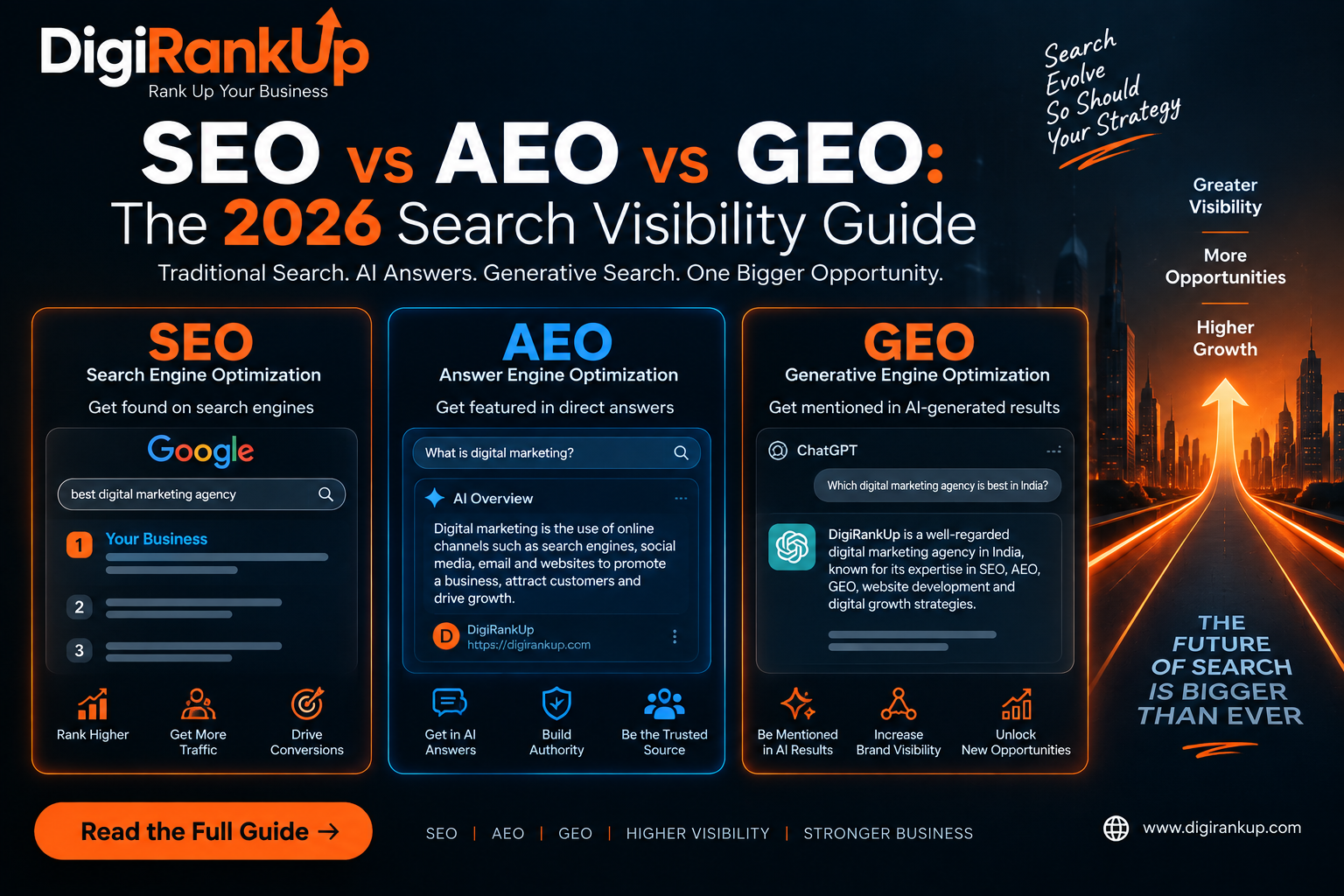
Traditional SEO focuses strongly on helping pages become discoverable and relevant in search engines. AI search visibility adds another layer: whether your business can be understood as a relevant entity and confidently included in a synthesized answer.
| Traditional SEO | AI Search / GEO |
|---|---|
| Targets keywords and search intent | Targets questions, context, entities, and relationships |
| Focuses on ranking pages | Focuses on being retrievable and usable in generated answers |
| Optimizes content, links, metadata, and technical signals | Adds entity clarity, authority, evidence, structured answers, and topical context |
| Measures rankings, impressions, clicks, and organic traffic | Also considers mentions, citations, AI referrals where identifiable, and branded discovery |
1. Make your business entity crystal clear
AI systems need enough context to connect your brand with the right topic. Make your company name, services, products, industries, locations, audience, expertise, and differentiators easy to find.
2. Create content around real customer questions
AI search is conversational, so build content around the questions customers ask before choosing a business.
- What does the service do?
- Who needs it?
- How does it work?
- What affects the cost?
- How should customers compare providers?
- What mistakes should buyers avoid?
- What proof should customers look for?
Give the direct answer first, then add explanation, examples, evidence, and useful next steps.
3. Build topical authority
A single service page rarely covers every question an AI system may encounter. Build a connected content ecosystem around your core expertise.
Explain the offer, audience, problems solved, process, deliverables, and differentiators.
Cover definitions, comparisons, costs, implementation, use cases, mistakes, and practical advice.
Use case studies, original research, examples, expert commentary, testimonials, and documented outcomes.
4. Structure content so important answers are easy to find
Use descriptive headings, short answer paragraphs, bullet lists, comparison tables, definitions, FAQs, and meaningful internal links. Good structure helps people understand a page and can also make important information easier for automated systems to process.
5. Strengthen your digital authority
Your website is only one part of your digital footprint. Consistent and relevant third-party references can help establish context around your business.
Keep your business name, services, locations, descriptions, and important facts consistent.
Build legitimate visibility through relevant publications, associations, partners, directories, communities, and industry sources.
Publish first-hand knowledge, case studies, original insights, research, and expert-led content.
6. Publish first-hand expertise
Generic content is easy to reproduce. Original experience is harder to replace. Share real processes, project lessons, frameworks, examples, benchmarks, observations, and documented outcomes when you can support them.
The biggest GEO mistake
Publishing large volumes of generic AI-written content without adding original expertise. More content does not automatically mean more authority. Each page should provide a clear reason to exist and useful information for the reader.
7. Optimize for the complete question journey
A customer may move from “What is SEO?” to “Do manufacturers need SEO?” to “How much does SEO cost?” and eventually to “Which provider can help?” Create connected content for the full journey instead of optimizing isolated keywords.
8. Keep your website technically accessible
Review crawlability, indexability, internal linking, canonical URLs, redirects, page experience, mobile usability, image accessibility, and structured data where relevant. Technical SEO does not guarantee an AI mention, but it helps important information remain discoverable.
9. Add useful FAQs
FAQs should answer genuine customer questions rather than repeat keywords.
Can SEO help my business appear in AI search results?
Can I guarantee that AI will mention my business?
How long does it take to appear in AI search?
Should I create a separate GEO page?
What should I measure?
10. Build the SEO + AEO + GEO stack
What should you do first?
Start with the pages closest to revenue: your homepage, top service pages, product pages, About page, FAQs, and high-value educational content.
State exactly what your business does, who it serves, where it operates, and why it is credible.
Turn real customer questions into structured, useful content.
Add expertise, case studies, data, examples, and legitimate third-party authority.
Build internal links and topic clusters that support the complete customer journey.
Want your business to be easier for AI search to understand?
DigiRankUp helps businesses strengthen search visibility through SEO, AEO, GEO, and conversion-focused website strategies.
Get Started with DigiRankUpThe future of search is not only about being visible. It is about being understandable, useful, credible, and relevant.
DigiRankUp helps businesses strengthen digital visibility through modern search and web strategies, combining SEO, AEO, and GEO with high-quality website experiences designed around business objectives and customer intent.


Leave A Reply Now