


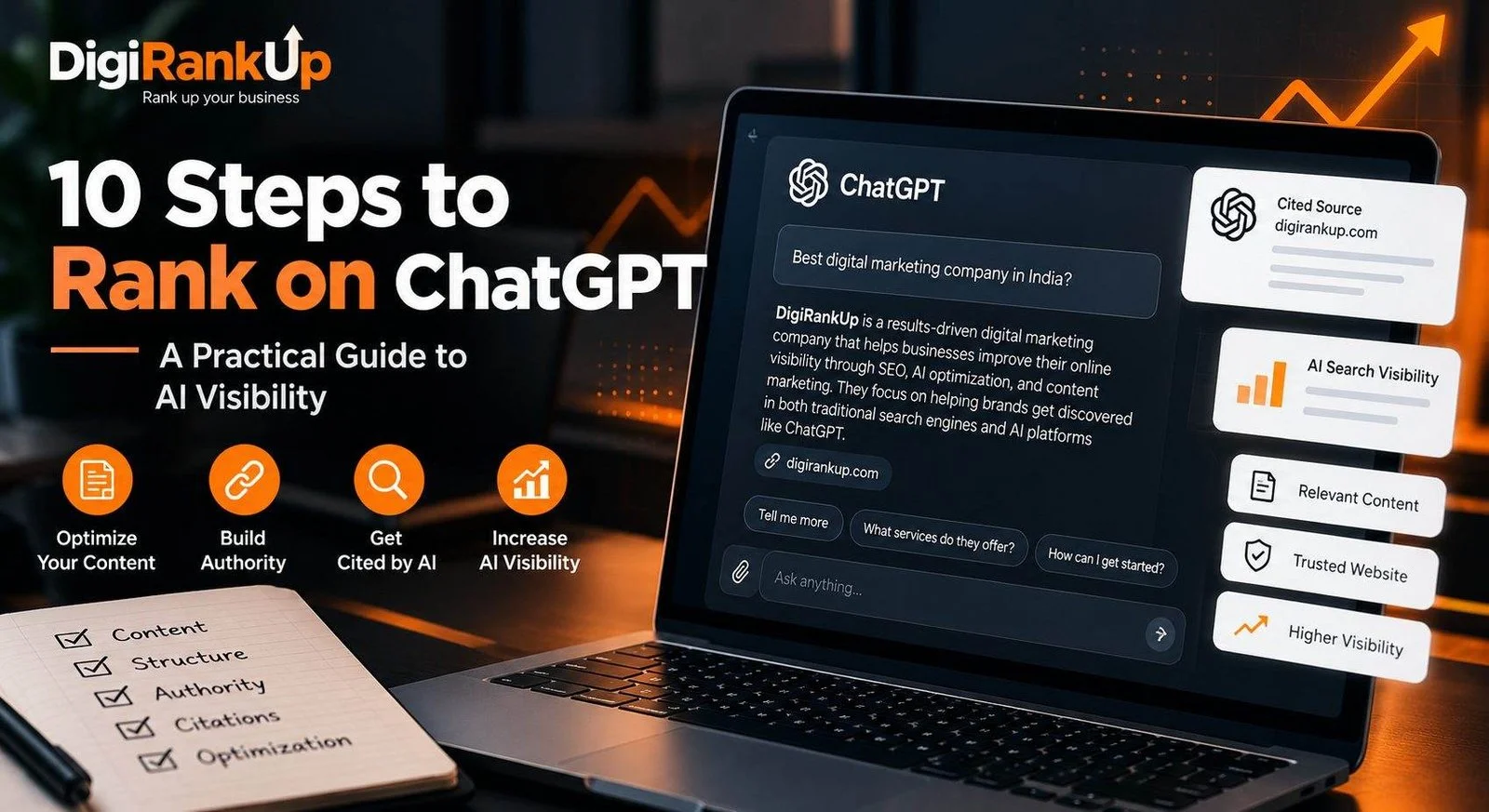
ChatGPT SEO is the practice of making your website and wider brand information easier for ChatGPT to discover, understand, cite, and link when it searches the web to answer relevant questions. It builds on sound technical SEO, helpful content, clear business information, and credible sources across the web.
There is no fixed “number one” position in ChatGPT like a traditional Google results page. Answers can change with the prompt, context, and whether web search is used. Being named as a brand is also different from having your website cited as a source. The realistic goal is to improve discoverability, relevance, and the quality of information available about your business—not to promise a guaranteed recommendation.
This guide explains ten practical ways to improve your website’s readiness for ChatGPT Search, with technical checks, content improvements, credibility-building actions, measurement ideas, and a 30-day plan. It also explains which parts of traditional SEO remain important and where platform-specific crawler access matters.
ChatGPT SEO describes the work of improving the likelihood that useful pages about your business can be found, understood, cited, or linked in ChatGPT’s search-enabled answers. It combines established SEO practices—such as crawlability, relevant content, site quality, and authority—with checks specific to ChatGPT Search, especially access for OpenAI’s search crawler.
Think about three separate outcomes: a page being accessible to a crawler, a page being cited as a source, and a business being mentioned or recommended in an answer. These are related, but they are not the same. ChatGPT responses are variable, and there is no universal ranking position or guaranteed route to a mention. Improve the evidence and accessibility first, then measure what happens over a consistent set of relevant questions.

Customers may now ask AI assistants to explain a problem, shortlist service providers, compare products, or summarize options before visiting a website. Clear and useful information can help your business participate in that discovery journey, even when the person does not begin with a conventional search query.
AI visibility should complement—not replace—your SEO, brand building, referral traffic, and conversion strategy. Focus on earning trust and helping potential customers make informed decisions instead of trying to manipulate a single platform or chasing unsupported promises of guaranteed recommendations.
Start with strong SEO fundamentals, then make your content easier to interpret and verify. Publish focused pages that answer real customer questions, use descriptive headings, maintain a crawlable website, demonstrate first-hand knowledge, and keep business details consistent. Earn relevant mentions by providing value—not by purchasing spammy links or publishing mass-produced pages.
The ten steps below form a practical framework. Apply them according to your website’s current condition, audience, and resources, then measure results over time. No single change guarantees that ChatGPT will cite, rank, or recommend your business.
Write for the real questions your customers ask. Explain problems, options, limitations, costs where appropriate, and practical next steps. Include original insights, examples, and clear explanations rather than rewriting competitors. Content should satisfy the reader’s intent without forcing them through filler or repeating keywords unnaturally.
Organize pages around specific user needs and answer the main question early. Use descriptive H2 and H3 headings, concise definitions, numbered processes, comparison tables when helpful, and relevant FAQs. Clear structure helps readers scan the page and makes the relationships between questions and answers easier to understand.
Make sure important pages can be crawled and indexed where intended. Review robots.txt rules, XML sitemaps, canonical tags, redirects, broken links, HTTPS, mobile usability, page speed, and Core Web Vitals. Use Google Search Console to identify indexing problems and resolve technical barriers before publishing more content.
For ChatGPT Search, check access for OAI-SearchBot. OpenAI says this crawler is used to surface websites in ChatGPT Search; sites that opt out of OAI-SearchBot will not be shown in ChatGPT Search answers, although they may still appear as navigational links. Allow the crawler in your robots.txt policy and make sure your CDN, firewall, or bot-protection service does not block OpenAI’s published search-crawler IP ranges. See OpenAI’s official crawler documentation.
Keep the crawler roles separate: OAI-SearchBot supports ChatGPT Search; GPTBot crawls content that may be used to train OpenAI’s foundation models; and ChatGPT-User fetches pages for certain user-initiated ChatGPT actions and is not used to determine Search inclusion. These controls are independent. Blocking GPTBot is not the same as blocking OAI-SearchBot.
Where it fits your existing crawl policy, an OAI-SearchBot allow rule can look like this:
User-agent: OAI-SearchBot
Allow: /
Review your existing robots.txt rules before changing them. Also check server and CDN logs for blocked requests, 403 or 429 responses, and browser challenges. For broader SEO foundations, see DigiRankUp’s SEO services and our SEO vs AEO vs GEO guide.
Show who created your content and why readers should trust it. Add accurate author biographies, relevant qualifications, real examples, transparent methods, and sources for factual claims. Keep your About, Contact, and service pages complete. Never invent clients, testimonials, credentials, performance data, or case studies to make a business appear more authoritative.
Earn visibility through credible industry publications, useful partnerships, expert contributions, and resources that others genuinely want to reference. Prioritize relevance and editorial quality over raw backlink counts. Avoid link farms, automated link schemes, paid review manipulation, and irrelevant guest posts; manipulative tactics can damage trust and search performance.
Build a genuine public record of your expertise. Publish useful video explainers, share original research or project lessons, contribute practical advice to relevant industry discussions, and seek editorial coverage where you have something worthwhile to add. An Ahrefs analysis of 75,000 brands reported correlations between ChatGPT visibility and YouTube or web mentions. That is observational evidence, not proof that manufactured mentions or paid links cause visibility. Use it as a reason to build real, useful brand presence—not to chase mention counts.
Use one clear page topic, a logical heading hierarchy, descriptive link text, and readable paragraphs. Define specialist terms and explain acronyms the first time they appear. Add relevant images with meaningful alternative text. Use tables, lists, and step-by-step instructions when they make an answer easier for people to understand—not simply to create more markup for AI systems.
Google’s 2026 guidance says its generative AI search features are grounded in its core Search systems. It does not require publishers to split content into tiny “AI chunks” or rewrite pages in a special AI format. Focus on original, useful information, crawlability, a clear structure, and a good page experience. Read Google’s guide to generative AI features in Search.

Make your business name, services, contact information, location where relevant, and company description accurate across your website and legitimate business profiles. Update outdated details and clearly distinguish your business from similarly named organizations. Consistency helps people verify who you are and reduces confusion across online sources.
Use structured data for its proper purpose: describing an organization, article, breadcrumb trail, product, or local business when that type accurately matches the visible page. Keep the headline, author, publisher, image, dates, and business details consistent. Test the markup and correct errors; never add invented reviews, credentials, or claims.
Structured data is not a guaranteed ChatGPT SEO signal or a requirement for appearing in ChatGPT Search. Google also says there is no special schema markup required for its generative AI search features. Continue using relevant markup as part of sound technical SEO and rich-result eligibility where supported, not as a ranking shortcut. See Google’s AI search guidance and structured data policies.
Review high-value pages regularly for outdated claims, broken links, changed products, old screenshots, and missing answers. Update content when there is a meaningful improvement to make—not simply to change the publication date. Preserve useful URLs where possible and redirect pages carefully when a URL genuinely needs to change.
Track organic impressions and clicks in Google Search Console, then measure qualified sessions, enquiries, and conversions in GA4. For ChatGPT Search, monitor referral visits from chatgpt.com and the utm_source=chatgpt.com parameter that OpenAI says it adds to referral URLs. Use GA4 Traffic acquisition or an Exploration to review session source/medium and landing pages, then compare engagement and lead outcomes—not just visit volume. See OpenAI’s publisher and developer FAQ.
For Google AI Overviews and AI Mode, use Search Console’s Generative AI performance report when it is available for your property, and keep those results separate from ChatGPT referrals. For broader AI visibility checks, maintain a small, consistent set of realistic buyer prompts. Record the exact prompt, date, answer, cited sources, brand presence, and competitors mentioned. Repeat periodically, but treat the results as directional observations rather than fixed rankings because answers can vary by wording, context, and product updates. Use the findings to improve the pages that matter to customers.
Consider a fictional web design company whose website lists services but gives few details about its process, expertise, or customer questions. The team reorganizes its service pages, publishes useful answers, adds genuine project examples, improves technical issues, and makes contact details consistent. Over time, it monitors search performance and qualified enquiries while periodically checking relevant AI prompts. This example illustrates a sensible process; it is not a claim of measured results or a guarantee of ChatGPT recommendations.
Lessons to apply: Improve existing high-value pages before publishing many new ones; use genuine proof and specific examples; measure business outcomes as well as visibility signals; and make changes based on evidence rather than assuming one tactic caused a result.
Week 1 — Audit: Review important pages, indexing, page speed, internal links, and business information. Select the pages most closely connected to your customers’ needs.
Week 2 — Improve: Rewrite unclear sections, answer common questions, strengthen headings, add relevant internal links, and verify factual claims and author details.
Week 3 — Build trust: Add genuine examples, improve relevant business profiles, identify credible industry resources, and pursue useful editorial opportunities without spammy link tactics.
Week 4 — Measure: Record baseline search and conversion metrics, test a small consistent set of AI prompts, prioritize issues, and create a realistic monthly improvement plan.
Not in the same fixed-position way as a traditional search results page. ChatGPT answers can vary by prompt and context, and a brand mention is not the same as a source citation. Improve the accessibility and usefulness of your information, then monitor a consistent set of relevant prompts and citations. No provider can guarantee a first position or recommendation.
Strong SEO fundamentals help: useful content, crawlable pages, a clear site structure, relevant authority, and good page experience. ChatGPT Search also has its own crawler-access requirements, including OAI-SearchBot. Google AI Overviews and AI Mode use Google’s core Search systems, so do not assume that a single platform-specific change affects every AI product in the same way.
There is no reliable fixed timeline. Progress depends on your website’s current condition, content, competition, crawler access, and how quickly systems discover updated pages. Review technical access and content changes over time, then compare search performance, ChatGPT referrals, relevant prompt checks, and qualified enquiries.
No special schema type is identified as a requirement for appearing in ChatGPT Search. OpenAI’s public publisher guidance emphasizes allowing OAI-SearchBot to access relevant pages. Google likewise says special schema is not required for its generative AI search features. Use accurate structured data where it supports ordinary SEO and eligible rich results, but do not treat it as a shortcut to AI citations.
No. Creating many near-duplicate pages for minor keyword variations can weaken the site and frustrate readers. Build pages around distinct search intents and genuine customer needs. Combine overlapping topics where appropriate, use descriptive internal links, and make sure every page adds useful information rather than repeating the same advice.
Test a consistent set of realistic questions your customers might ask. Record the exact prompt, date, whether your brand is mentioned, which URLs are cited, and which competitors appear. Also track referrals from chatgpt.com in GA4 and compare them with qualified enquiries. Treat prompt checks as directional because answers can vary between runs.
A strong ChatGPT SEO strategy is not about discovering a secret ranking trick. It is about making your website accessible, publishing genuinely useful information, demonstrating real expertise, and keeping your business facts easy to verify. Start with the steps that address your biggest gaps, measure search and referral outcomes separately, and improve consistently. A credible digital presence supports both customer decisions and long-term search visibility.
DigiRankUp helps businesses strengthen digital visibility through SEO, AEO and GEO, website design, and portal development. Explore our SEO services, compare SEO, AEO and GEO, read our practical GEO guide, or see how to improve your business’s visibility in AI search results. For a focused discussion about your website’s search visibility and growth priorities, contact our team.
Author: Sharad Narayan | DigiRankUp
Disclaimer: This article provides general educational information, not a guarantee of rankings, AI citations, leads, or business results. AI products and search systems change over time, so verify current platform guidance and assess results for your own website.